
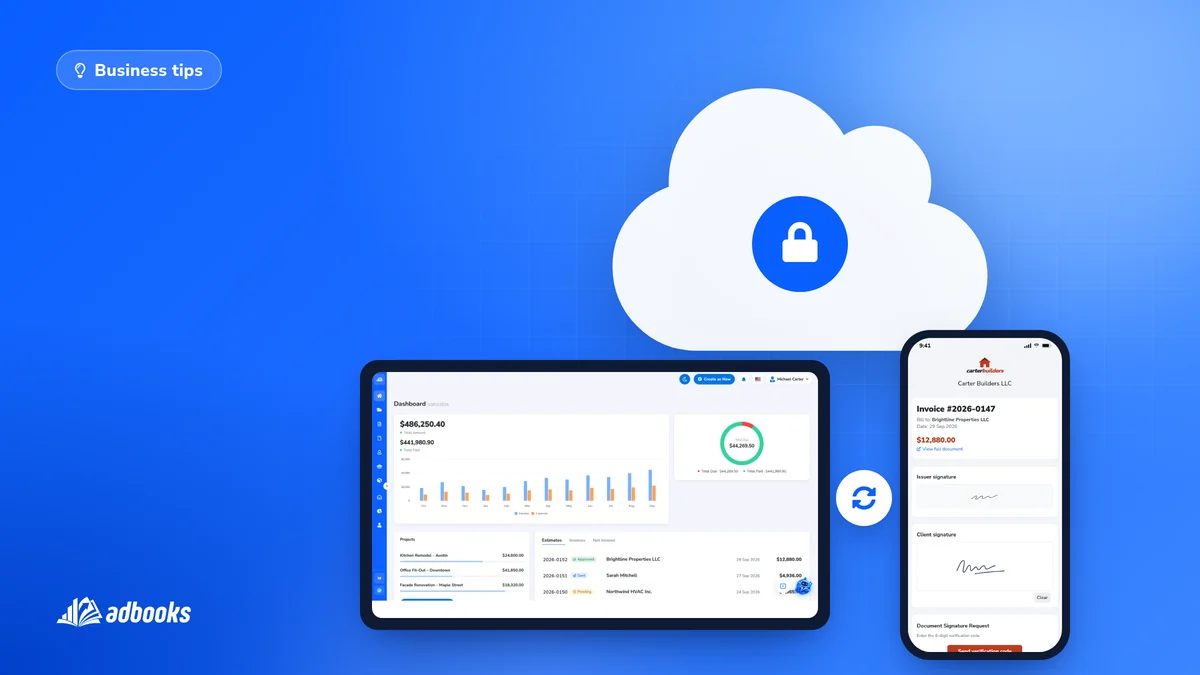
Some businesses still keep their invoices, quotes, and records in local spreadsheets or a folder on one computer. It works, until it doesn't. Here are five concrete risks that go away once your data lives in the cloud instead.
1. Human error and forgetfulness
Backups, password hygiene, and security updates on a local machine all depend on someone remembering to do them, every time. One skipped backup or one weak password is all it takes. Cloud accounting backs itself up and updates itself automatically, so a busy week never turns into a lost month of records.
2. Weaker protection against attacks
A local machine is only as safe as your own network and firewall. A single infected attachment or a compromised device can put every invoice and every client record at risk at once. A proper cloud platform runs on servers with dedicated firewalls, monitoring, and security protocols - a problem on your laptop stays a problem on your laptop.
3. Fires, floods, theft, and other disasters you cannot plan around
An external backup drive is still one physical object that can be destroyed along with everything else in the same room. Cloud data is generally stored in more than one location, so a single event at your office cannot take it all with it.
4. Manual entry mistakes
Spreadsheets do not stop you from mistyping a number or forgetting to update a total, and they rarely give you a real, trustworthy picture of income, expenses, or outstanding payments. Software that generates invoices and tracks payments automatically removes most of that manual risk, and gives you real-time reports instead of a spreadsheet you hope is current.
5. Who actually has access
On a shared computer or a spreadsheet passed around by email, it is hard to say exactly who can see or edit what. A proper system lets you set access per person - some can see reports only, others can create and edit documents - so you decide who touches what, instead of trusting everyone with everything.
The bottom line
None of this is about the cloud being trendy - it is about which risks you are willing to carry. Automatic backups, real security, protection against disasters, fewer manual mistakes, and clear access control add up to a business that is easier to run and harder to disrupt, no matter which device you are on.