
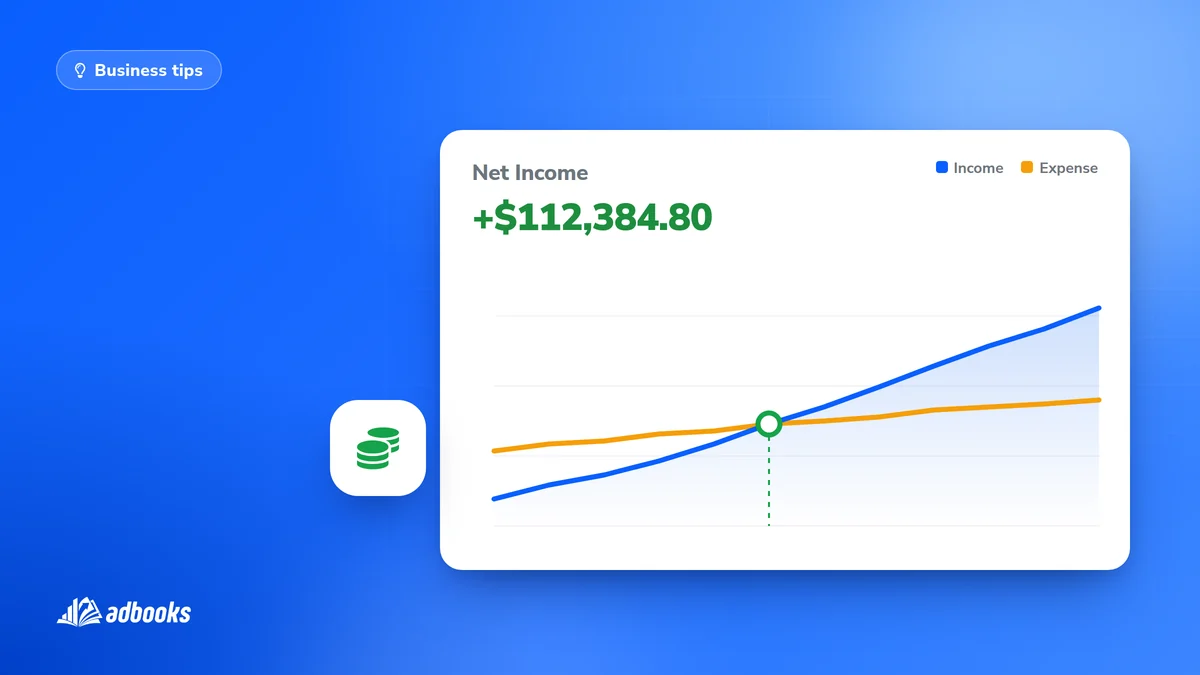
"When will my business turn a profit?" is one of the first questions every new business owner asks, especially after leaving a steady paycheck to take the risk. There is no single answer that applies to every business, but there is a reliable way to find your own answer.
It depends on your business model
An online business with low overhead can often become profitable faster than one that needs a shop, equipment, or a team from day one. To get a real answer for your own business, you need to look past the industry average and into your own numbers.
Define what "profitable" means for you
Profitability, in the strict sense, means revenue exceeds expenses. But many owners actually mean something else at first: break-even living, where the business covers your basic personal expenses but nothing more. The real goal is further out - corporate profitability, where the business generates enough surplus to reinvest and grow on its own.
Start with a break-even analysis
Your break-even point is the moment your revenue covers all operating costs, and you stop depending on new injections of your own capital. It is the first milestone on the way to profitability, and it is worth calculating early - a rough estimate is far better than no estimate at all.
Build a pro forma balance sheet
Once you know your break-even point, a pro forma balance sheet tells you when actual profit starts. It rests on four numbers:
- Sales plan - a realistic one-to-three-year revenue estimate, based on your own experience and market research rather than wishful thinking.
- Cost of goods or services - everything it costs you to produce what you sell, including your own labour hours if you offer a service.
- Fixed costs - rent, internet, phone, accounting, hosting, marketing, insurance, salaries: the costs that do not move with how much you sell, and that you need to cover every single month.
- Gross profit - revenue minus the costs above, tracked month by month so you can see progress instead of guessing at it.
Track it, don't just plan it
A plan only pays off if you keep checking it against reality. Monthly income and expense reports let you see whether you are ahead of or behind your own forecast, and adjust before a small gap becomes a big one. This is exactly what AdBooks does automatically once your quotes and invoices are in the system - no separate spreadsheet to maintain.
The bottom line
Profitability depends on your business model, your market, and your competition, but most of all on how precisely you manage costs and revenue. The start is often slow - with a real plan, a break-even estimate, and monthly tracking, it stops being a guess and becomes something you can actually steer.