
An advance invoice protects you from paying for materials and equipment out of your own pocket before the client pays. Here is what an advance invoice is, when to issue one and how to deduct it from the final invoice without mistakes.
In short
- An advance invoice is issued for a payment before the job is finished.
- It needs the same details as a normal invoice, clearly marked as an advance.
- On the final invoice the advance is deducted, so the client pays only the rest.
- The most common mistake is an advance that is forgotten or deducted twice.
What is an advance invoice
An advance invoice asks the client for part of the amount up front, before or during the work. It is mostly used for materials, equipment or made-to-measure work, where you have costs before the job is done.
Unlike a pro forma invoice, which is only information about the price, an advance invoice is an accounting document that gets recorded.
When to issue an advance invoice
- Before work starts, when you need to buy materials (tiles, a boiler, windows, a fitted kitchen).
- On longer jobs, in stages, for example after the shell work and after the services.
- With new clients, when you do not yet know how reliably they pay.
Typical advances are 30 to 50 %, and up to 50 % for made-to-measure work, because you cannot return the materials.
What an advance invoice must contain
- your details and the client’s details
- invoice number and date, clearly marked "advance invoice"
- a reference to the quote or contract the advance relates to
- the advance amount (percentage or fixed), net amount and tax if you are VAT registered
- payment terms and method
Tax rules on advances differ from country to country, so follow the rules that apply to your business.
How the advance is deducted from the final invoice
When the job is done, you issue the final invoice for the full amount and deduct the advance already paid. The client pays only the difference.
Example: job €10,000, advance 30 % = €3,000. Final invoice: €10,000 minus the €3,000 advance = €7,000 to pay.
Put the advance invoice number on the final invoice, so both the client and the accountant see how the documents connect.
Common mistakes
- The advance is forgotten, so the client gets an invoice for the full amount.
- The advance is deducted twice, for example when there are several advance invoices.
- The advance is calculated by hand and rounded wrongly.
- The advance invoice has no reference to the quote, so later nobody knows what it was for.
How it works in AdBooks
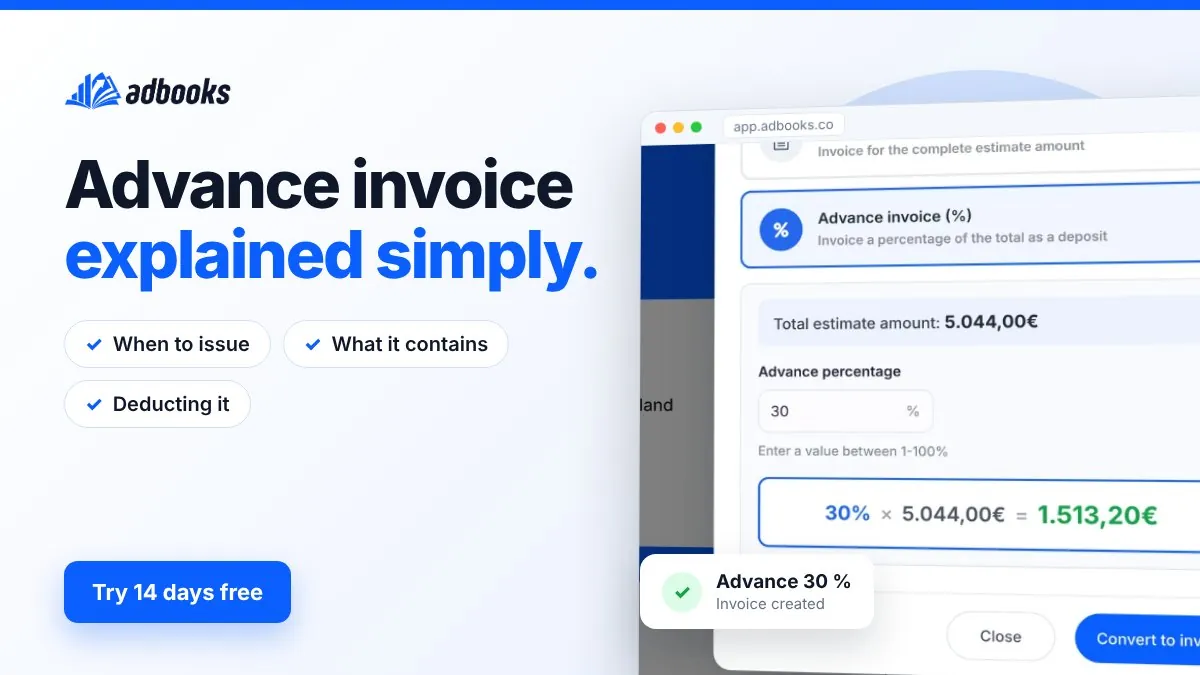
From an accepted quote choose "Convert to invoice", enter the advance percentage and AdBooks calculates the amount and tax. When you issue the final invoice, the advance is deducted automatically and the advance invoice number is added for you.
Frequently asked questions
How large is a typical advance?
Usually 30 to 50 %, depending on how much of the job is materials. For made-to-measure work the advance is usually higher.
Is a pro forma invoice the same as an advance invoice?
No. A pro forma is information about the price, while an advance invoice is a document for a payment up front that gets recorded.
How do I deduct the advance from the final invoice?
Show the full amount of the job on the final invoice, deduct the advance paid and reference the advance invoice number. The client pays only the difference.